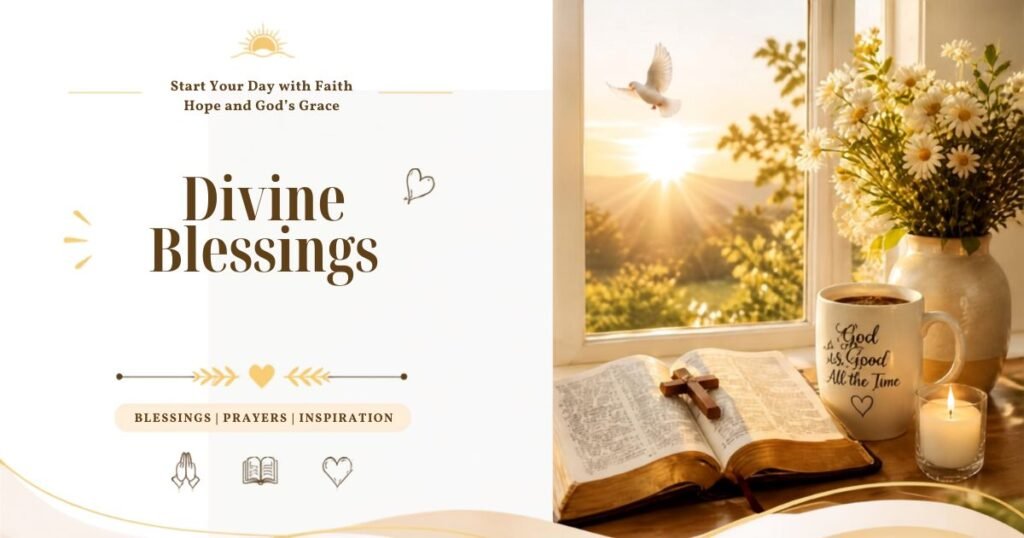
Life feels heavy sometimes. You search for something that lifts you up. That’s when a divine blessing comes in.
A blessing isn’t just a nice phrase. It’s a moment of hope you can hold onto. In this article, you’ll find beautiful divine blessings, inspirational lines for tough days, and good blessings you can share with anyone you love.
I’ve spent years collecting and studying blessings from different faiths and cultures. I know which words actually touch people’s hearts. By the end of this guide, you’ll have a full toolkit of blessings for prayers, cards, social media, or just a quiet moment alone.
Let’s dive in.
Beautiful Divine Blessing
A beautiful divine blessing speaks straight to the soul in simple, warm words.
Beauty in a blessing doesn’t come from fancy language. It comes from honesty. A short line that says “may peace find you today” often means more than a long paragraph. That’s why the most beautiful blessings are usually the shortest ones.
I always tell people this: don’t chase perfect words. Chase true ones. A blessing you actually mean will always sound more beautiful than one you copied just to sound poetic.
Here are qualities that make a blessing feel truly beautiful:
- It’s short and easy to remember
- It focuses on peace, love, or gratitude
- It feels personal, not generic
- It can be said out loud without sounding awkward
Examples of beautiful divine blessings:
| Occasion | Sample Blessing Idea |
|---|---|
| Morning | May your day be filled with light and calm |
| New home | May this house be filled with warmth and joy |
| Friendship | May your bond only grow stronger with time |
| Difficult times | May you find strength when you need it most |
You can write these on a card, share them in a text, or simply say them as a quiet prayer. Beauty in blessing comes from intention, not decoration.
Inspirational Divine Blessing
An inspirational divine blessing gives you courage when you feel stuck or afraid.
These blessings don’t just comfort you. They push you forward. Think of them as a gentle nudge that says “you can keep going.” I’ve seen people repeat one inspirational line every morning just to reset their mindset for the day.
The best inspirational blessings connect faith with action. They remind you that hope isn’t passive. It moves you.
Why inspirational blessings matter:
- They build resilience during hard seasons
- They shift your focus from fear to faith
- They give you a sense of purpose
- They work well as daily affirmations
How to use inspirational blessings effectively:
- Say one blessing each morning before you start your day
- Write it on a sticky note where you’ll see it often
- Share it with someone who’s going through a hard time
- Use it as a caption for a meaningful photo
For example, instead of just saying “have a good day,” try something like “may today bring you the strength to face whatever comes.” That single shift makes the blessing feel active, not passive.
Inspirational blessings work best when they’re specific to what someone’s going through. A blessing for someone starting a new job should feel different from one for someone healing from loss.
Good Divine Blessing
A good divine blessing is one that fits the moment and feels genuine to both the giver and the receiver.
“Good” doesn’t mean generic. It means well-matched. A good blessing for a wedding won’t work the same way at a funeral. Knowing your audience is half the job.
I always ask myself one question before sharing a blessing: would this actually mean something to the person receiving it? If the answer is no, I look for a better one.
Signs of a genuinely good blessing:
- It matches the emotional tone of the moment
- It’s respectful of different beliefs and traditions
- It doesn’t feel copy-pasted or robotic
- It leaves the person feeling seen, not just spoken to
Good blessings by occasion:
- Birthday: May this new year bring you clarity, joy, and steady growth
- Grief: May you feel comfort even in the quiet moments
- New beginnings: May this fresh start be guided by wisdom and grace
- Everyday life: May small blessings find you in ordinary moments
A good blessing also respects boundaries. Not everyone shares the same faith, so keep your wording open enough that it feels inclusive rather than forced. That’s what makes a blessing truly good, not just well-written.
What Is a Divine Blessing and Why Does It Matter
A divine blessing is a spoken or written wish for someone’s wellbeing, believed to carry spiritual meaning beyond ordinary words.
People have used blessings across nearly every culture and religion for thousands of years. They show up in prayers, ceremonies, greetings, and even simple goodbyes. A blessing isn’t magic. It’s intention, expressed out loud.
Why does this matter today? Because we’re surrounded by noise, but a genuine blessing cuts through it. It reminds someone that they’re not alone. In a world full of quick texts and short attention spans, a heartfelt blessing still lands differently.
I’ve noticed that people remember blessings longer than compliments. A compliment fades. A blessing tends to stick because it feels like it comes from somewhere deeper.
The History Behind Divine Blessings
Divine blessings trace back to ancient religious and cultural traditions that used spoken words to invoke protection and favor.
In many faiths, blessings were seen as a transfer of spiritual power from a higher source to a person. Priests, elders, and parents often gave blessings during major life events like births, weddings, and journeys.
Over time, blessings moved beyond formal religious settings. Today, you’ll find them in greeting cards, social media captions, and casual conversations. The core idea hasn’t changed though. A blessing is still a wish for good to come to someone else.
Understanding this history helps you appreciate why blessings still feel powerful. They carry centuries of meaning, even in a simple modern sentence.
How to Write Your Own Divine Blessing
Writing your own divine blessing starts with identifying exactly what you want for the other person.
Don’t overthink the wording at first. Start with the feeling. Do you want to wish them peace? Strength? Joy? Once you know the core feeling, the words come easier.
Simple steps to write a blessing:
- Pick one core feeling (peace, strength, joy, healing)
- Think about the person’s current situation
- Keep the sentence short, ideally under 15 words
- Read it out loud to check if it sounds natural
For example, if a friend is starting a new job, you might write, “May this new chapter bring you confidence and calm.” That’s specific, short, and genuine.
Avoid overly formal or old-fashioned language unless that fits your personal style. A blessing should sound like you, not like a textbook.
Divine Blessings for Different Occasions
The best divine blessing changes depending on the moment you’re speaking into.
A wedding blessing focuses on unity and lasting love. A blessing for someone sick focuses on healing and comfort. Matching the blessing to the moment shows real thoughtfulness.
Quick reference table:
| Occasion | Focus of the Blessing |
|---|---|
| Wedding | Unity, love, lifelong partnership |
| Graduation | Wisdom, new opportunities, courage |
| Illness | Healing, comfort, strength |
| New baby | Protection, joy, guidance |
| Travel | Safety, peace, good fortune |
When in doubt, keep it simple and sincere. A short blessing that truly fits the moment beats a long one that feels generic.
Divine Blessings in Different Religions
Divine blessings exist across nearly every major religion, each with its own tone and tradition.
In Christianity, blessings often reference grace, protection, and God’s presence. In Islam, blessings frequently invoke mercy and peace. In Hinduism and Buddhism, blessings often focus on inner peace, balance, and enlightenment.
Even without quoting specific religious texts, you can still create a blessing that feels spiritually respectful. Use universal language like grace, peace, light, and strength. These words resonate across most belief systems.
If you’re writing a blessing for someone whose faith you don’t fully know, this approach keeps your words meaningful without being exclusive to one tradition.
How Divine Blessings Improve Mental Wellbeing
Divine blessings can genuinely support mental wellbeing by encouraging gratitude, hope, and a sense of connection.
Psychologists often point out that gratitude practices reduce stress and improve mood. A blessing, in a way, is a form of gratitude directed outward. When you bless someone, you’re focusing on good outcomes instead of fear or anxiety.
Receiving a blessing can feel just as powerful. It reminds you that someone cares about your wellbeing, even in small ways. That sense of connection matters more than people realize.
Simple mental health habits using blessings:
- Say one blessing over yourself each morning
- Send a blessing to a friend who seems stressed
- Keep a small journal of blessings you’ve received
- Use blessings instead of generic “good luck” messages
This small shift in language can create a noticeably calmer mindset over time.
Common Mistakes People Make When Sharing Blessings
The most common mistake people make is using a blessing that feels copied instead of personal.
When a blessing feels generic, it loses its impact. People can usually tell the difference between a heartfelt line and something pulled straight from a random list online.
Other common mistakes include:
- Making the blessing too long and losing the emotional punch
- Ignoring the person’s specific situation
- Using overly religious language for someone of a different faith
- Sending the same blessing to everyone without any personal touch
To avoid these mistakes, always personalize at least one part of the blessing. Even adding someone’s name or referencing their specific situation makes a huge difference.
Where to Use Divine Blessings in Everyday Life
You can use divine blessings far beyond formal prayers or ceremonies, right in your everyday conversations.
Think about text messages, social media captions, greeting cards, or even quiet personal reflection. A short blessing added to a birthday text feels more meaningful than “happy birthday” alone.
Everyday places to use a blessing:
- Morning routines or journaling
- Messages to someone going through a hard time
- Social media captions for meaningful photos
- Cards for weddings, births, or graduations
- Quiet personal prayers before sleep
The key is consistency. The more naturally you weave blessings into daily life, the more genuine they feel, both to you and to the people receiving them.
Frequently Asked Questions
What is a powerful verse for blessings?
Numbers 6:24–26 is one of the most well-known biblical blessings: “The Lord bless you and keep you; the Lord make His face shine on you and give you peace.”
This passage asks for God’s protection, grace, presence, and peace over a person’s life.
It is often used as a prayer, benediction, or daily blessing for family and loved ones.
What is the meaning of divine blessings?
Divine blessings generally refer to good gifts, favor, protection, guidance, peace, or provision believed to come from God.
In Christianity, blessings are understood as expressions of God’s grace rather than something earned through human effort alone.
They can include both spiritual blessings and ordinary gifts such as relationships, opportunities, strength, and daily provision.
What are the 7 types of blessings?
The Bible does not provide one official list called the “seven types of blessings,” but Christian teachings may group blessings in different ways.
Common categories include spiritual, material, relational, physical, emotional, vocational, and generational blessings.
These categories are a teaching framework, not a standardized biblical classification.
What are examples of divine blessings?
Examples of divine blessings may include peace during difficult circumstances, spiritual growth, wisdom, protection, provision, and meaningful relationships.
Christians may also consider answered prayer, opportunities to serve others, forgiveness, and renewed strength to be blessings from God.
Biblical blessings ultimately emphasize God’s grace, presence, and relationship with His people.
What is a good prayer for divine blessings?
“Dear Lord, thank You for Your grace and for every blessing You have placed in my life.”
“Please guide my steps, strengthen my faith, protect my loved ones, provide what we need, and fill our hearts with Your peace.”
“Help me recognize Your blessings, use them wisely, and become a blessing to others. Amen.”
Conclusion
A divine blessing is more than pretty words. It’s a small act of care that can change someone’s entire day. Whether you’re sharing a beautiful blessing, an inspirational one, or simply a good and heartfelt line, the goal stays the same: to remind someone they matter.
Start small. Pick one blessing from this guide and share it today. Notice how it feels, both for you and for the person receiving it. Over time, these small moments build real connection and peace.
Keep your blessings simple, sincere, and personal. That’s what makes a divine blessing truly powerful.

Welcome to Blessingora! I’m Oliver Bennett, an SEO Expert with 3 years of experience in SEO and content strategy. I help websites rank higher, grow organic traffic, and build a stronger online presence. My goal is to make SEO simple, effective, and valuable for everyone.
Let’s grow and succeed together!